
Questions we often hear
FREQUENTLY ASKED QUESTIONS
Straight answers about the project, the land, and the review process.
-
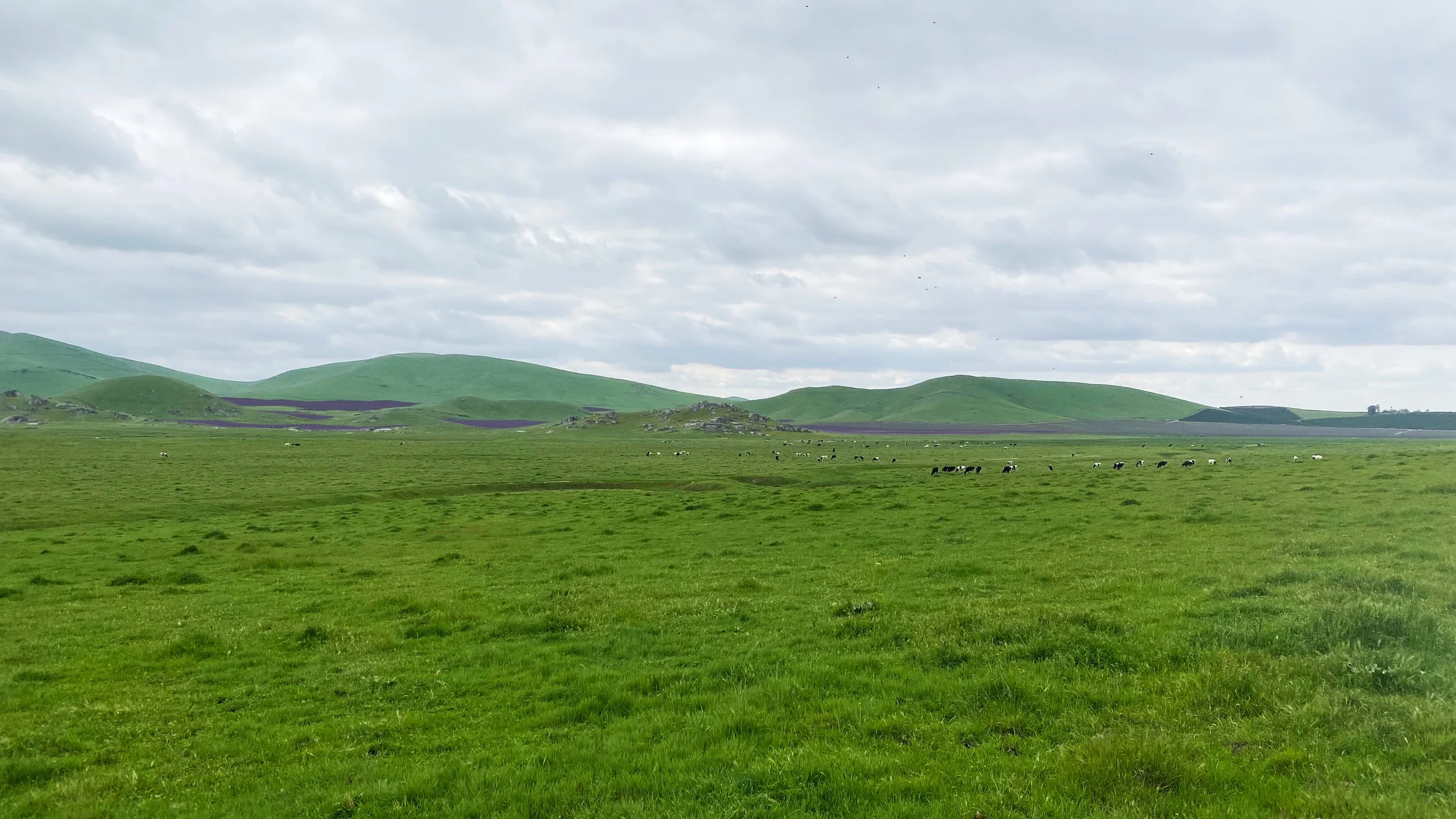
A proposed solar and storage project in unincorporated Tulare County, near Road 276 and Avenue 196, developed by Eolus North America.
-
The project is currently planned to have a generating capacity of up to 150 MW on approximately 675 acres of non-prime rangeland. The final solar and storage system size will be confirmed as engineering and interconnection studies progress.
-
Solar projects are a temporary use of the land, not permanent conversion. When the project reaches the end of its operational life, the facilities would be decommissioned, equipment removed, and the site restored in accordance with Tulare County requirements, applicable permit conditions, and landowner agreements. The goal is to return the property, to the extent practicable, to its pre-project condition so it can continue to support future compatible land uses.
-
Biologists survey the site before construction, consistent with state and federal requirements, including focused surveys for protected species. A mitigation monitoring and reporting program, developed during the CEQA review, will require biological monitoring during construction, environmental training for workers, speed limits, buffer zones around any active nests, and many other protective measures. During operations, open space around the panels can continue to support of the same species that used the land prior to development.
-
The project is designed to avoid or minimize impacts. Wetlands and streams on or near the site are identified through environmental surveys early in the design process, and project layout is designed to avoid these features and maintain buffers where they occur. Any work near waterways would be subject to state and federal permitting requirements. A Stormwater Pollution Prevention Plan will be implemented under state water quality regulations; this document outlines the measures that will be used during construction to keep soil and other pollutants from washing into nearby waterways when it rains.
-
Perimeter fencing, required for safety and security, will be designed to allow wildlife to move through or under without injury or entrapment. A solar site with wildlife-friendly fencing would allow more wildlife movement than standard agricultural fencing used in the region.
-
Solsken must comply with applicable local, state, and federal requirements and obtain all necessary permits before construction, including review under CEQA. The CEQA review, with Tulare County as the lead agency, requires, among other things, consultation with area tribes, cultural resource surveys conducted by qualified archaeologists, and immediate work-stoppage procedures if cultural resources are found during construction. Permit conditions include monitoring and reporting requirements through operations.
-
Early estimates include approximately $30 million in property tax and $4 million in sales & use tax over the project life, 300–800 construction jobs, and 10–30 permanent jobs, plus ongoing community investment.
-
Solar disturbs far less soil than housing or commercial development. Most panels sit on steel posts driven into the ground rather than requiring major grading. Concrete foundations are limited to a small number of equipment areas, such as inverters, storage units, and the substation, which together make up a small fraction of the overall site. Where soil must be moved, topsoil is stockpiled separately and replaced after construction. Revegetation after construction reduces erosion and supports long-term soil health.
-
Solar projects are temporary infrastructure, typically operating for 25 to 35 years. At the end of the project's life, above-ground equipment is removed, below-ground infrastructure is removed consistently with the decommissioning plan and landowner agreements, and the land is restored and revegetated. To guarantee this happens, Tulare County requires a decommissioning and reclamation plan backed by financial assurance so the site can be restored to pre-development conditions or better. The amount of this financial assurance is based on the estimated cost of removing equipment, restoring the land, and completing cleanup, as determined through the decommissioning plan. For a 150 MW Solar + storage facility, this developer-funded bond is estimated to be greater than $10 million.
-
Photovoltaic solar panels do not create heat. They absorb sunlight that would otherwise reach the ground and convert some of it to electricity. Studies show that local temperature changes near solar sites are negligible, similar to those caused by roads or rooftops. Solsken plans to reestablish vegetation under and around the panels rather than the more traditional gravel groundcover. Vegetation under panels can help cool the ground, retain soil moisture and nutrients, and support pollinators and other species.
-
Yes. The panels are mounted on single-axis trackers that follow the sun from east to west during the day. Because the panels keep moving, none of the ground would be fully shaded all day. The area beneath and between the rows receives a mix of direct sun and passing shade throughout the day, with open ground in full sun between the rows. Research at operating solar sites has found that various native and climate-appropriate plants do well in this environment.
-
Solar panels are silent. Supporting equipment, such as inverters, may produce a low hum during daylight operation. A noise study will be prepared as part of the environmental review. Tulare County noise standards require that the project not exceed the established thresholds at the property line.
-
Solsken would use photovoltaic panels, the same technology as rooftop solar, which convert sunlight directly into electricity. Unlike a concentrated solar plant that uses mirrors, towers, or high-temperature fluids, photovoltaic panels produce very little heat.
-
Like all electrical equipment including household wiring, appliances, and power lines the project will generate low-frequency, non-ionizing electromagnetic fields (EMFs). Unlike ionizing radiation (such as X-rays), non-ionizing EMFs do not have enough energy to damage DNA or alter cells. Studies and field measurements at operating solar facilities have found that EMF levels decrease rapidly with distance and at the facility fenceline are comparable to typical background levels.
-
See the Get Involved page for the public input opportunities, or contact the project team directly.